
7 huge reasons why the factory farming industry is seriously flawed (part one)
Posted By:
AfSD™(ADVOCATE FOR SAVING DOGS™)
7 huge reasons why the factory farming industry is seriously flawed (part one)
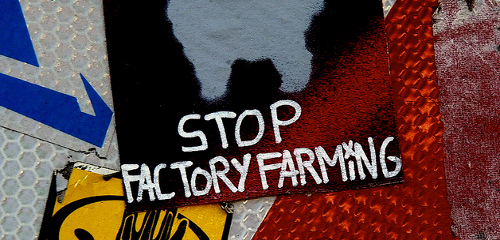
Some
strive to live a healthful lifestyle, and though they may exercise with
consistent dedication and consume copious amounts of fruits, vegetables
and dietary supplements, they may still not be entirely immune to
ailments as the years progress. There are also the lucky few who can
seemingly eat and drink whatever they want, and will somehow still
manage to get a clean bill of health whenever they visit their doctor.
While the general state of wellness for the majority of us may seem
heavily weighted on randomness and the sheer luck of the draw,
throughout the last decade alone, thousands upon thousands of studies
have zeroed in on how paying attention to both diet and exercise positively impact longevity.
For myriad reasons, one of the foods that has received its fair share of negative health press has been meat, but it’s far more complicated than merely just labeling it as a ‘bad food’ that should be avoided entirely. There are actually several positive nutritional attributes that make lean cuts of animal-based protein valuable to the human body. However, things have gotten pretty sticky with
regard to the modern methods used to produce animal-based protein, and
that has directly impacted the quality, nutritional content and safety
of the final product. Today’s big fat juicy steak may taste good to
mainstream eaters, but it comes at a much larger price than most people realize.
The meat industry has evolved into a multi-billion dollar business designed to accommodate high consumer demand as efficiently and cost-effectively as possible. In an effort to continually supply budget-friendly selections to shoppers, a combination of science, technology and mechanization are employed to bring animals from the field to the plate in record time.
In the real world, however, ‘the field’ is a euphemism for overcrowded
containment systems (otherwise known as factory farms) where animals exist in highly unnatural, often inhumane conditions that become a breeding ground for illness.
This system has proven to be ideal in terms of yielding high profits, but it significantly compromises our environment,
the quality of life that animals bred for food ultimately experience, and the end product which in many cases is sub-par and prone to contamination.
Unlike the nutritional profile of wild game
— which contains beneficial, unsaturated omega-3 fatty acids and far
less fat overall — factory farmed meat contains very high levels of
the very same type of saturated fat that “is implicated in many of the
chronic degenerative diseases” that plague our society, such as type II
diabetes, heart disease, and prostate/breast/colon cancer. There is a
particularly strong
correlation between the consumption of animal fats derived from meat,
eggs, milk and cheese and increased mortality rates from heart disease.
Another
concern revolves around highly processed offerings such as sausage,
delicatessen meats, hot dogs and bacon. Typically treated with
potassium nitrate and sodium nitrate — two curing ingredients that help
retard the growth of certain microbes in products while helping them
to retain a desirable, fleshy tone — both agents happen to be toxic in high amounts.
While a lethal dose of 22 milligrams would require that a 150 pound
adult consume “18.57 pounds of cured meat product containing 200 ppm
sodium nitrite” in one sitting, they would more than likely die from acute salt toxicity first.
Nevertheless, a Harvard University research team analyzed the findings
of 20 global health studies involving a total of one million
participants and determined that the nitrate preservatives found in a
modest 50 gram portion of processed meat are a significant risk factor for coronary heart disease and diabetes.
The good news, relatively speaking, is that cutting one’s consumption of both red and processed meat is associated with a reduced incidence of multiple types of cancer
— such as lung, esophagus, bowel, and liver. In the interest of
offering unbiased information for This Dish Is Veg readers, it’s only
fair to note that the medical community still seems to acknowledge that meat can be incorporated into a healthy lifestyle,
particularly when the leanest cuts of unprocessed, grass-fed buffalo,
venison and beef tenderloin are consumed (such as top sirloin,
top-round, eye-round, and bottom round) in portion sizes that are no
larger than 6 ounces, roughly three times each week. They also concur
that grass-fed meat is an ideal option since it possesses a heart-healthy blend of conjugated linoleic acids and omega 3 fats, as well as cancer-fighting antioxidants compared to its grain-raised counterparts.
Nevertheless, the decision of whether one should or should not
consume animal-based products is a highly personal one, and should be
motivated by a number of factors, including education, ethics and
environmental concerns. There are seemingly countless aspects to both
arguments that require a great deal of time and commitment to explore
thoroughly, but it’s almost impossible to do either justice within the
confines of this space. Nevertheless, you’ll definitely want to make a
date to revisit this site tomorrow because seven different glaring factory farming flaws will be examined in great detail
— and whether you’ve been a long term vegan, vegetarian, flexitarian
or your know anyone who appears to be enamored with meat, you’ll
definitely want to share this eye-opening information. Thank you for
your time!
********************************
Jump forward to part two of this article here.
 Elizah Leigh | @elizahleigh
Elizah
Leigh’s master’s degree in education combined with her passion for the
written word and deep-seated interest in environmental issues has proven
to be the ideal trifecta for her present status as a green journalist.
Currently commissioned to write a reference book on vegetarianism,
Elizah hopes to inspire people through her words. Follow Elizah on Facebook.
Photo credit:cc:flickr.com/photos/akbar2
AfSD™(ADVOCATE FOR SAVING DOGS™)
Please join me at Friendburst
Advocate for Saving Dogs™
Animal Rights
♥We♥Are♥All♥Connected♥
Wolfen Warriors
Click Here For A Complete List Of Blogs By AfSD™