
Human physiology proves humans were meant to eat plants
Human physiology proves humans were meant to eat plants
“Let Them Eat Art” (114493383)

Reposted with thanks by:
Martha
*♥†♥*Garden of Vegan*♥†♥ * (www………myspace…..com/192455612)
Christopher (www………myspace…..com/132118982)
Why Humans Are Primarily Plant-Eaters By Design
by Michael Bluejay

A fair look at the evidence shows that humans are optimized for eating exclusively plant foods, and not meat – Consider
* Human anatomy: We’re most similar to other herbivores, and drastically different from carnivores
* Longevity & health:
The more meat we eat, the sicker we get – Meat is poison to us – It’s
the primary reason we get heart disease, cancer, diabetes, osteoporosis,
and every other major degenerative disease – If eating meat were
natural, it wouldn’t destroy our health
* Physical performance: People have much better endurance when they don’t eat meat — whether they’re professional athletes or not
Clearly we’re capable of eating meat- But that doesn’t mean it’s natural
You
can dress a monkey up in a cute little suit and teach it to perform
circus tricks, but just because it can doesn’t mean that it’s natural —
nor that it should – When I say that meat-eating is unnatural, I mean
simply that our bodies aren’t optimized to have it be a normal part of
our diets — and we suffer the consequences when we make it so
Vegan bodybuilder, Kenneth Williams – Shattering the myth that vegans are skinny and malnourished

The
meat-eating reader already has half a dozen objections to this before
(s)he’s even read the rest of the article, and I will address those
objections specifically, but first let me address them generally: It is
human nature to want to feel that what we’re doing is right, proper, and
logical – When we’re confronted with something that suggests that our
current practices are not the best ones, it’s uncomfortable – We can
either consider that our choices may not have been the best ones, which
is extremely disturbing, or we can reject that premise without truly
considering it, so that we don’t have to feel bad – And we do this by
searching our minds for any arguments we can for why the challenge must
be wrong, to justify our current behavior
Think about that for a moment:
Our feeling that our current actions are correct isn’t based on our
arguments – Rather, our actions come first and then we come up with the
arguments to try to support those actions – If we were truly logical,
we’d consider the evidence first and then decide the best course of
action – But often we have it in reverse, because it’s too difficult to
accept that we might have been wrong

This
is particularly true when it comes to veg{….etari}anism – It is quite
easy to identify because the anti-….veg{etari}an arguments are
usually so weak and desperate, compared to other kinds of discourse – A
person who would never normally suggest something so fantastic as the
idea that plants can think and feel pain, will suddenly all but lunge
for such an argument when they feel their meat-eating ways are being
questioned – It’s human nature
At an earlier point in my life,
I was in the same position as you probably are – My habits were
challenged by a book I ran across in the library called Going Vegetarian
– I didn’t want to consider it fairly, because I wanted to keep eating
meat
I’d grown up eating it, and I liked it – And there was
another reason: I’d grown up in a small farming community raising and
killing chickens – Accepting the book’s premise really meant that I’d
have to admit that I might not have made the best choices – So I came up
with various weak defenses to justify my behavior – But deep down I
knew I was kidding myself, and practicing a form of intellectual
cowardice – When I considered the arguments honestly, I stopped eating
animals – That was over 20 years ago and it was absolutely the best
decision I ever made
So I challenge you: stop trying
to figure out ways that I “must” be wrong even before you’ve bothered to
read the rest of this article – Instead, read it, and actually consider
it rather than reflexively trying to come out with ways to dismiss it
out of hand – You can certainly still disagree after you’ve considered
all the evidence — but not before
Most meat-eating readers
will find it necessary to try to defeat me, at least in their minds, so
let’s consider what constitutes doing so: providing more and better
evidence for your position – You do not win the argument by making a
single point, as most of the readers who email me seem to think – The
evidence favoring a plant diet for humans is clear, convincing, and
overwhelming – There is definitely some evidence for the other side, to
be sure, but it’s simply not nearly as strong – What I’m saying is, if
there are 30 strong points for, and you come up with one or two against,
which is the better position? I mention this because the people who
email me about this article seem to believe that whoever makes the
fewest points has presented the most convincing case – They somehow seem
to believe that all the evidence I present somehow disappears into thin
air when they present their lone argument, such as that humans have
canine teeth – Please don’t fall into that trap
Many believe
that lunging at at the minority of evidence in the red box makes their
position compelling – But it doesn’t – The only way to make that
position compelling is to make the box bigger – A whole lot bigger
But haven’t humans always eaten meat?
The
angry people who email me always insist, “But humans have always eaten
meat!” I can’t think of a better example of a case in which people
believe something to be true just because they assume it is – We all
grew up thinking that our ancestors were meat-eaters, but where did we
get that idea? Is it true just because it’s part of our collective
consciousness? More importantly, what does the evidence say?
John AMcDougall, M D,
perhaps the most knowledgable expert on the relationship between diet
and disease, asserts that our early ancestors from at least four million
years ago followed diets almost exclusively of plant foods – Many other
scientists believe that early humans were largely veg{etari}an – (See
articles by Grande & Leckie and Derek Wall) – This is important
because while prehistoric peoples hunted animals, that is still a
relatively recent development in the long period of human existence –
Certainly not long enough for our bodies to have adapted to it from
evolution – Here’s some evidence: The Maasai in Kenya, who still eat a
diet high in wild hunted meats, have the worst life expectancy in the
world (Fuhrman)
There’s another important fact never acknowledged by meat proponents:
Humans act by idea rather than by instinct – Other animals are
programmed to know what food is – We are not – For us, it’s learned
behavior – Or in some cases, guessed behavior We can make choices about
what we should eat even if that’s contrary to good health, as millions
prove every day when they eat at McDonald’s – If our ancestors ate meat,
they were simply being human and making choices rather than acting on
instinct – Think about it: Do you really believe that cavemen were true
experts about nutrition? If so, what other major decisions about your
life would you like to put in the hands of a caveman?
What it means to be an omnivore

There
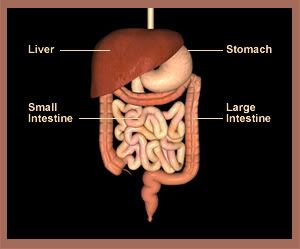
is no question that humans are capable of digesting meat- But just
because we can digest animals does not mean we’re supposed to, or that
it will be good for us – We can digest cardboard – That does not mean we
should
If
the evidence shows that our anatomy favors the digestion of plant
foods, and we’re healthier when we eat less animal foods, what do we
make of the fact that we’re capable of eating animals? It’s simple: We
have the ability to eat a wide variety of foods as a survival mechanism –
The fact that we can eat just about anything, including meat, is very
handy, from a biological point of view – But the fact that we’re able to
doesn’t mean that we’re designed to – The evidence for this is that our
biology is similar to that of other herbivores, and the more animal
foods we incorporate into our diets, the more our health suffers – In
fact, it is rather specious to claim that humans are natural meat-eaters
considering how poorly we fare when we do so
McDougall
explains how the ability to digest animal foods didn’t hurt our survival
as a race, although it takes a toll on our lifespan:
“Undoubtedly,
all of these [……..meat-….containing] diets were adequate to
support growth and life to an age of successful reproduction – To bear
and raise offspring you only need to live for 20 to 30 years, and
fortuitously, the average life expectancy for these people was just that
– The few populations of hunter-….gatherers surviving into the 21st
Century are confined to the most remote regions of our planet
&endash;- like the Arctic and the jungles of South America and
Africa &endash;- some of the most challenging places to manage to
survive – Their life expectancy is also limited to 25 to 30 years and
infant mortality is 40% to 50% – Hunter-….gatherer societies
fortunately did survive, but considering their arduous struggle and
short lifespan, I would not rank them among successful societies”
Finally, our physiology is much more similar to that of other plant-eaters than it is of true omnivores, as we’ll see shortly
Considering the other primates
Our
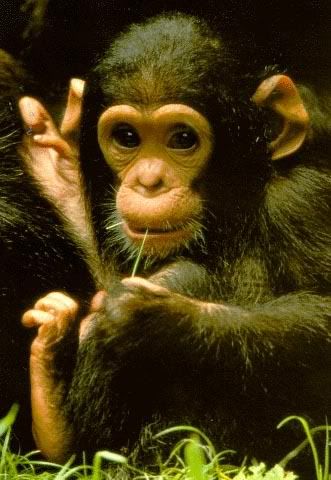
closest animal relatives are primates – They provide clues about our
ideal diet since our anatomy is so similar – Very few of them eat any
significant amount of animals, and those who do typically mostly stick
to things like insects, not cows, pigs, and chickens – Jane Goodall,
famous for her extensive study of apes while living with them, found
that it was very rare for the primates she saw to eat other animals –
Critics lunge all over the fact that Goodall discovered that primates
occasionally eat meat – But the key word here is occasionally – If we
ate meat is infrequently as the other primates did, our health would be a
lot better – Goodall herself apparently wasn’t impressed by primates’
occasional eating of meat: Jane Goodall is a vegetarian
Why humans are primarily plant-eaters by design
http://www.youtube.com/watch?v=Vc2HfsdVvjo
How
slight is the other primates’ animal consumption? This article on
primate eating habits from Harvard has a bar graph of all the things
that chimps and monkeys eat (Fig 3), and meat isn’t even in the chart –
What they do eat is fruit, seeds, leaves, flowers, and pith – There is a
category called “……..Miscellaneous”…., which for most species
amounts to less than 5% of their diet, and for chimps and redtail
monkeys less than 1% – The Honolulu Zoo gives a slighty higher figure,
saying that non-plant consumption is 5% of a chimp’s diet, but this
includes their main non-plant food, termites -you slice it, their diet
is at least 95% plants
Which brings up another point:
The people who hysterically scream at me that chimps are omnivores,
besides ignoring that chimps’ meat consumption is so small as to be
virtually non-existent, never acknowledge that the non-plant foods
chimps eat are not the same things humans eat – Chimps do not eat cattle
and chickens – And humans don’t eat termites – The idea that the
meat-laden American diet can be justified because chimps may eat a
whopping 5% of non-plant foods, none of it cattle or chickens, and much
of it termites, is rather silly
Let’s use the Harvard
article’s figure for chimps and round it up to a generous 1% – If that
were beef — which it is not — how much beef would that be? About 1/3
of an ounce, or 1/50 of a pound – That’s about 1/7th of a medium carrot –
Yes, there you have chimps’ overwhelming “omnivorism”
Consider
also that even though primates eat meat sparingly, there again it’s
likely because they’re intelligent and like humans are able to make
choices to act outside of instinct – As other writers put it, “While
chimpanzees are known to kill, this behaviour is not necessarily dietary
but ritualistic” – Eugene Khutoryansky who does believe that eating
meat is natural, still cautions that the implications of that should
give us pause:
Eating meat is indeed natural in the sense
that other animals do it as well – In fact, it is even done on occasion
by our closest living relatives, the chimpanzees- However, there are
many other things which are also natural – For example, chimpanzee males
sometimes rape the females in their tribe – Chimpanzees sometimes
engage in organized warfare against other tribes with which they compete
for territory – A chimpanzee male, in a moment of rage, sometimes picks
up a nearby infant, and crushes his skull against a rock – And
chimpanzees do on occasion eat meat, and they do on occasion engage in
cannibalism, in spite of the fact that there is a plentiful supply of
food from other sources
So eating meat is indeed absolutely
natural- However, the fact that it is natural does not imply that it is
ethically permissible – If we believed that eating meat was ethically
permissible simply because other animals did it as well, then this would
imply that there is nothing wrong with rape, cannibalism, or
infanticide, all of which routinely occurs throughout the animal kingdom
Humans lack a desire to eat whole animals
True carnivores (and omnivores) get
excited about eating whole prey animals when they see them – Humans do
not – We’re interested in eating the body parts only because they’ve
been removed from the original animal and processed, and because we grew
up eating them, making it seem perfectly normal – It’s amazing how much
of a disconnect we’ve been able to learn about the difference between
animals and food – As GoVeg puts it:
While carnivores take pleasure in killing animals and eating their raw flesh,
any human who killed an animal with his or her bare hands and dug into
the raw corpse would be considered deranged – Carnivorous animals are
aroused by the scent of blood and the thrill of the chase – Most humans,
on the other hand, are revolted by the sight of raw flesh and cannot
tolerate hearing the screams of animals being ripped apart and killed –
The bloody reality of eating animals is innately repulsive to us, more
proof that we were not designed to eat meat
Ask yourself:
When you see dead animals on the side of the road, are you tempted to
stop for a snack? Does the sight of a dead bird make you salivate? Do
you daydream about killing cows with your bare hands and eating them
raw? If you answered “no” to all of these questions,
congratulations……..&..amp;..emdash;you’re a normal human
herbivore&..amp;….emdash;like it or not – Humans were simply not
designed to eat meat – Humans lack both the physical characteristics….
of carnivores and the instinct that drives them to kill animals and
devour their raw carcasses
Comparing humans to other animals
Human
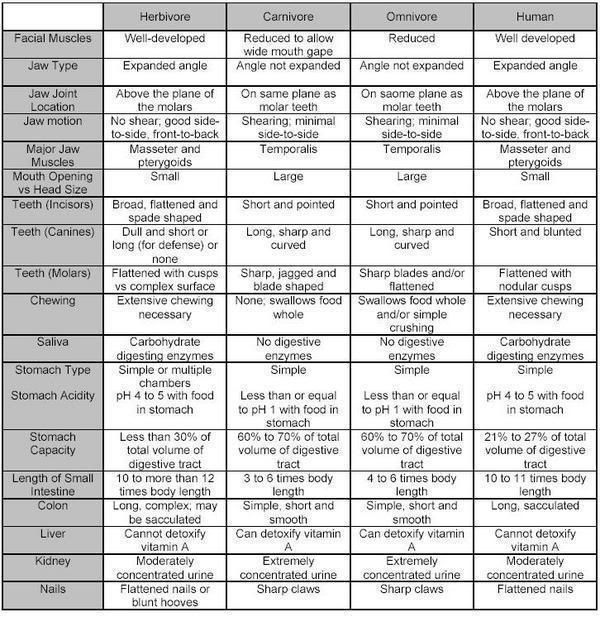
physiology is strikingly similar to that of other plant-eaters, and
quite unlike that of carnivores – It is telling that in none of the
horribly misspelled missives that readers have sent in to argue with me
do they ever deny the data in the following table – They simply think
that by making some other point (e g , that humans possess canine teeth)
that somehow obliterates the more convincing data in the table
Meat-Eaters
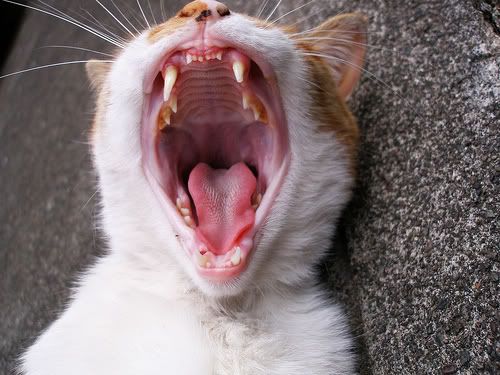
Carnivorous animals,
including the lion, dog, wolf, cat, etc, have many unique
characteristics…. which set them apart from all other members of the
animal kingdom – They all possess a very simple and short digestive
system — only three times the length of their bodies – This is because
flesh decays very rapidly, and the products of this decay quickly poison
the bloodstream if they remain too long in the body – So a short
digestive tract was evolved for rapid expulsion of putrefactive bacteria
from decomposing flesh, as well as stomachs with ten times as much
hydrochloric acid as non-….carnivorous animals (to digest fibrous
tissue and bones) – Meat-eating animals that hunt in the cool of the
night and sleep during the day when it is hot do not need sweat glands
to cool their bodies; they therefore do not perspire through their skin,
but rather they sweat through their tongues – On the other hand,
vegetarian animals, such as the cow, horse, zebra, deer, etc, spend much
of their time in the sun gathering their food, and they freely perspire
through their skin to cool their bodies – But the most significant
difference between the natural meat-eaters and other animals is their
teeth – Along with sharp claws, all meat-eaters, since they have to kill
mainly with their teeth, possess powerful jaws and pointed, elongated,
“canine” teeth to pierce tough hide and to spear and tear flesh – They
do NOT have molars (flat, back teeth) which vegetarian animals need for
grinding their food – Unlike grains, flesh does not need to be chewed in
the mouth to predigest it; it is digested mostly in the stomach and the
intestines – A cat, for example, can hardly chew at all
Plant-Eaters
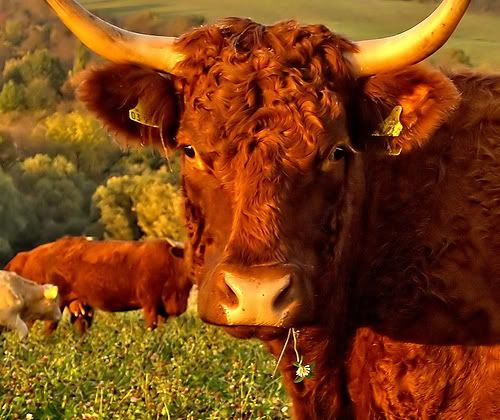
Grass-……..and-….leaf-eating animals
(elephant, cow, sheep, llama, etc) – live on grass, herbs, and other
plants, much of which is coarse and bulky – The digestion of this type
of food starts in the mouth with the enzyme ptyalin in the saliva- these
foods must be chewed well and thoroughly mixed with ptyalin in order to
be broken down – For this reason, grass-and-leaf eaters have 24 special
“molar” teeth and a slight side-to-side motion to grind their food, as
opposed to the exclusively up-and-down motion of carnivores – They have
no claws or sharp teeth; they drink by sucking water up into their
mouths as opposed to lapping it up with their tongue which all meat
eaters do – Since they do not eat rapidly decaying foods like the meat
eaters, and since their food can take a longer time to pass through,
they have much longer digestive systems — intestines which are ten
times the length of the body
Interestingly, recent studies have
shown that a meat diet has an extremely harmful effect on these
grass-and-leaf eaters – Dr William Collins, a scientist in the New York
Maimonedes Medical Center, found that the meat-eating animals have an
“almost unlimited capacity to handle saturated fats and cholesterol” –
If a half pound of animal fat is added daily over a long period of time
to a rabbit’s diet, after two month his blood vessels become caked with
fat and the serious disease called atheriosclerosi….s develops – human
digestive systems, like the rabbit’s, are also not designed to digest
meat, and they become diseased the more they eat it, as we will later
see
Fruit-eaters include mainly the anthropoid apes,
humanity’s immediate animal ancestors – The diet of these apes consists
mostly of fruit and nuts – Their skin has millions of pores for
sweating, and they also have molars to grind and chew their food; their
saliva is alkaline, and, like the grass-and-leaf eaters, it contains
ptyalin for predigestion – Their intestines are extremely convoluted and
are twelve times the length of their body, for the slow digestion of
fruits and vegetables
Human Beings
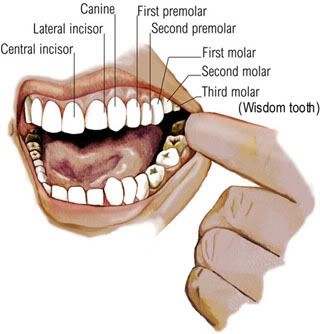
Human characteristics
are in every way like the fruit eaters, very similar to the grass-
eater, and very unlike the meat eaters, as is clearly shown in the table
above – The human digestive system, tooth and jaw structure, and bodily
functions are completely different from carnivorous animals – As in the
case of the anthropoid ape, the human digestive system is twelve times
the length of the body; our skin has millions of tiny pores to evaporate
water and cool the body by sweating; we drink water by suction like all
other vegetarian animals; our tooth and jaw structure is vegetarian;
and our saliva is alkaline and contains ptyalin for predigestion of
grains – Human beings clearly are not carnivores by physiology — our
anatomy and digestive system show that we must have evolved for millions
of years living on fruits, nuts, grains, and vegetables
Furthermore, it is obvious that our natural instincts are non-….carnivorous – Most
people have other people kill their meat for them and would be sickened
if they had to do the killing themselves – Instead of eating raw meat
as all flesh-eating animals do, humans boil, bake, or fry it and
disguise it with all kinds of sauces and spices so that it bears no
resemblance to its raw state- One scientist explains it this way “- A
cat will salivate with hungry desire at the smell of a piece of raw
flesh but not at all at the smell of fruit – If man could delight in
pouncing upon a bird, tear its still-living limbs apart with his teeth,
and suck the warm blood, one might conclude that nature provided him
with meat-eating instinct – On the other hand, a bunch of luscious
grapes makes his mouth water, and even in the absence of hunger he will
eat fruit because it tastes so good ”
Scientists and naturalists, including the great Charles Darwin who gave the theory of evolution,
agree that early humans were fruit and vegetable eaters and that
throughout history our anatomy has not changed – The great Swedish
scientist von Linné states: “Man’s structure, external and internal,
compared with that of the other animals, shows that fruit and succulent
vegetables constitute his natural food ”
So it is clear from
scientific studies that physiologically…., anatomically, and
instinctively, man is perfectly suited to a diet for fruit, vegetables,
nuts, and grains – This is summarized in the table above
from What’s Wrong with Eating Meat,
by Barbara Parham, ©Ananda Marga Publications, 1979
As
another author said, “The human body was not designed to catch or eat
animals – You have no claws – Your teeth do not rend flesh – Your mouth
can not seriously wound nor is it made to really get a good bite into an
struggling victim like true carnivores can – You are not fit to run
fast to catch prey- Meat-eaters have fast enough reflexes to ambush or
overtake a victim – You do not – Try catching a pig or a chicken with
your bare hands; see what happens”
“But what about canine teeth and binocular vision?”
It’s
part of our collective consciousness that we have “canine teeth” and
that this “proves” that we’re meat eaters – But the truth is that this
argument couldn’t be weaker
Humans’ so-called “canine teeth” are
unlike the canine teeth of actual canines, which are really long and
really pointed – Our teeth are absolutely not like theirs – In fact,
other vegetarian animals (like gorillas and horses) possess the same
so-called “canine” teeth
Overall, our teeth resemble those of
plant-eaters much more than meat-eaters – For example, we have molar
teeth (plant-eaters do, carnivores don’t) – Try to find a human-type
molar inside your cat’s mouth – Our teeth can also move side to side to
grind, just like the other plant-eaters, and completely unlike the
carnivores – Their jaws go only up and down
My favorite quote from when someone brought up the canine rationalization…. on a message board:
“Hey Julia–we evolved with canine teeth? I’d like to see you tackle a steer and tear it apart with those ferocious incisors”
What’s funny to me is how the teeth argument is so important to meat proponents
when they make their point about canine teeth, and then as soon as they
find out that our teeth are much more similar to those of herbivores
than of carnivores, and therefore consideration of our teeth suggests
that we’re designed to be plant eaters — suddenly what kind of teeth we
have is not so important to them after all
Others have argued that predators have eyes on the front of their heads for
binocular vision, while prey animals have eyes on the sides, indicating
that we fall into the predator camp – This ignores the fact that the
animals that we’re most similar to — the other primates — have eyes on
the front of their heads, and are almost exclusively vegetarian – It’s
also important to remember what I said at the top of this article: There
is certainly evidence on both sides of this debate, but the
preponderance of evidence clearly shows that we’re suited to eating
plants almost exclusively
“You’re not taking into account evolution”
Of
course I’m not – Anyone making the claim that we evolved to eat meat
through relatively recently-….developed hunting skills only
demonstrates how poorly they understand evolution, which takes place
over a much longer period of time – Besides, if we had truly evolved to
be meat-eaters, it wouldn’t kill us when we do so, which is the next
topic —
If meat is so good for us, it wouldn’t kill us
The
medical evidence is overwhelming and indisputable: The more animal
foods we eat, the more heart disease, cancer, diabetes, and other
degenerative disease we suffer – This has been exhaustively demonstrated
beyond any doubt – If it were natural for us to eat these food, they
wouldn’t kill us – The fact that health can be regained by laying off
meat and dairy is powerful evidence that we shouldn’t have been eating
those foods in the first place
Dean Ornish, MD was the first
person to prove that heart disease can be reversed, and he did so by
feeding his patients a vegetarian diet – John McDougall, MD has also
written extensively about how animal foods cause disease, and how people
can regain their health by eating vegan instead – The esteemed T Colin
Campbell oversaw the most massive study of the relationship between diet
and disease, the China Study, which the New York Times caled “the grand
prix of epidemiology” – – His conclusions are the same as the other
experts: we’re not designed to eat animal foods, because we get sick
when we do so
There is no need to argue with me about this
If
you feel otherwise, let’s just agree to disagree – I’ve received a ton
of email on this issue, none of it illuminating, most of it badly
misspelled, and I simply don’t have the time nor desire to debate
everyone who wants to argue with me- And trust me, I have definitely
heard every argument – (I stopped hearing genuinely new arguments
approximately 19 years ago) – If you feel so strongly about your
position that you absolutely must make it known, then simply do what I
did: Put up your own web page espousing your own views – You can be
confident that I will not write to you to argue about what you have
written
source
Because of your posting’s length/depth, it is too long for many who are not already fervent espousers. I read a fair amount of it.
I admire vegetarianism, and eat noticeably less meat than the average person in The U.S.A. People like you make me feel a tad guilty when I do. Plus, vegetarianism is generally healthier on our heart/arteries – a likely longer and more productive average lifespan that will spend less on health care.
I thank you for the continuing education.
This was almost as entertaining as the creationist videos at Thunderfoot’s “Why people laugh at creationists”. Amusing pseudo-science, very amusing. All this “evidence” and yet none of it can explain why humans have consumed animals for the past 2 million years, if we “never meant to be that way”. I mean if we were obvious “meant” to be herbivores, we would have evolved to be gorillas – who are – come to think of it – also omnivores, as well as chimpanzees and baboons, a number of lemurs and other primates – not all, but some.
I really missed the part in this pseudo-biology lecture of why humans still require a certain amount of amino acids and peptides to remain healthy.
Weissdorn already used what i was going to use. The amino acids bit that is stronger in meat and would take MANY beans to replace.
This entire blog also doesn’t get into how God said we can eat from meat except from the cloven hoof.
God made us so he is the top authority on the matter.
Eating meat in moderation is a good idea (when you get into your 30s) and more plants should be eaten but the evidence in this blog is not compelling enough to stop me from eating meat.