
Losing a Memory
Growing up I always loved answering the question, “Where were you born?” During my smart ass years my first response would always be, “In a hospital.” When pressed for an actual map location, “Peru” would be my response. “The country?!” would always be next. “No, a town in Illinois.”
Peru, Illinois was never widely known for much. In fact, the only thing the town seems to promote and celebrate is that Maud Powell was born there in 1867. I know, who’s Maud Powell, right?
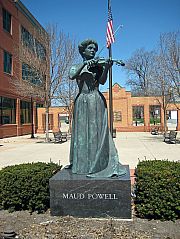
Actually, Maud Powell was the first American violinist to achieve international rank back in the early 1900’s. Have a listen to her performance of “Silver Threads among the Gold”.
Maud was also the niece of John Wesley Powell, Civil War hero and Grand Canyon explorer. Pretty impressive in some circles and well worth recognition, but Peru was the birthplace of a far more important thing in the early 1900’s. A thing used by people all over the world every day. A thing that made most people wake up and take notice every morning. As long as they remembered to wind it up the night before.
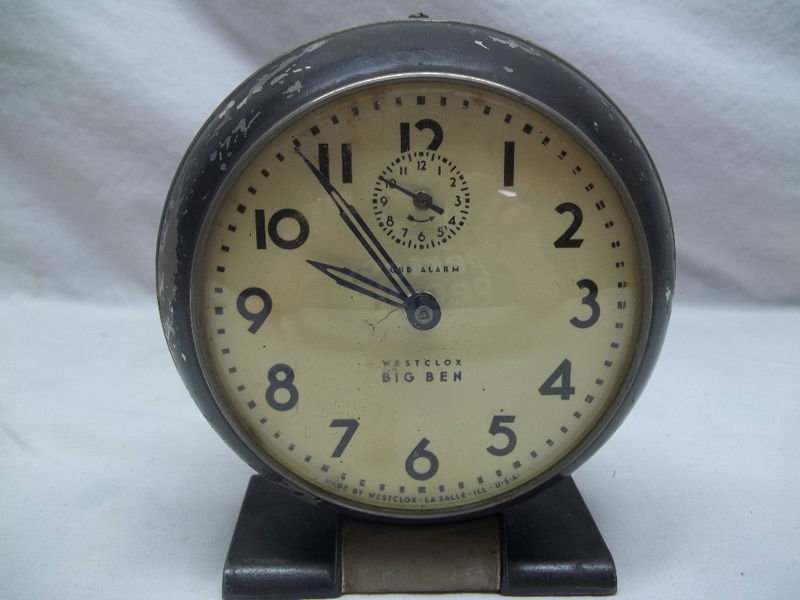
That’s the Big Ben alarm clock. Some of you may still have one of those clocks, or one of its newer models, and more than likely it still works. I know the ones I have still do. Although the annoyingly monotonous tick-tock sound and ear-splitting alarm bell makes me leave these clocks to rest in their wound down silence, I’ve kept them as small tributes to my hometown and the factory that helped it grow.
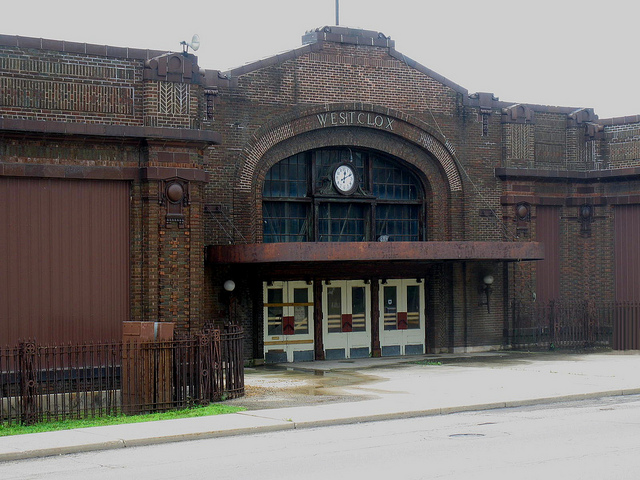
In 1884, Charles Stahlberg and a few others arrived in Peru to make clocks. They took up residence in the back of a department store and started building one clock a day. Their small company, with eight employees, worked up to making 3 or 4 clocks a day. A year later, they built a three story brick building and were producing 25 clocks per day. Although the production numbers grew, various issues caused the company to be bankrupted and reorganized twice. In 1888, The Western Clock Manufacturing Company, which subsequently became known as Westclox, was established and incorporated.
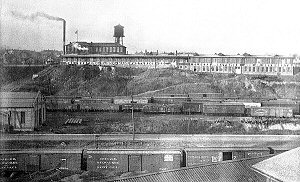
By 1902 the factory was built across the town border between Peru and La Salle and was producing almost 500,000 alarm clocks a year. After the introduction of the Big Ben in 1908, the Westclox factory expanded as the popularity of their trademark clock grew. Before the Depression hit, Westclox employed over 3,000 people and was able to keep over 1700 of them employed throughout the economic turmoil of the early 1930’s. When World War II was beginning in 1940, Westclox started making mechanical fuse parts for the military along with its timepieces. In 1942 it completely ceased all non-war production and concentrated solely on military parts. When it resumed normal production in 1945, Westclox had made 1,355,189,616 parts for the war effort.
In 1956 the Westclox factory complex occupied a two-by-four block area, consisted of 44 structures and was manufacturing 40,000 timepieces a day. At that time over 4,000 people, almost one-fifth of the total combined population of Peru and La Salle, were employed at the factory. In 1965, Westclox reached its pinnacle, having made and sold more clocks than any other company in the World.
Westclox continued manufacturing all types of clocks and watches at the La Salle/Peru factory until 1980 when it was closed for good. The factory complex was for the most part unused and deteriorating until 2006 when it was purchased by a group of developers who wanted to restore the factory buildings and convert the space into a retail and convention center. In 2007 they were able to get the factory added to the National Registry of Historical Places, but were never successful in garnering the public support or funds necessary for the massive restoration and conversion. I always thought that was a shame considering what Westclox did for the town and its citizens during its history.
Since 2007, the complex became a commercial rental property with a few small businesses occupying various portions of the main buildings. Although Westclox was all but forgotten, last I heard the clock above the main entrance still kept perfect time.
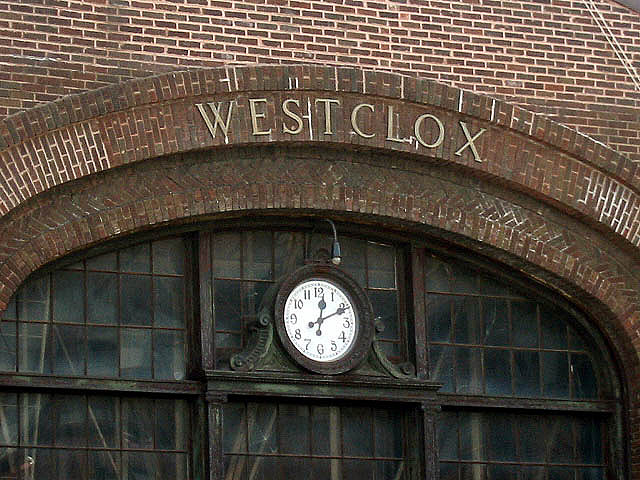
Time marches on and some things just can’t last forever. On New Year’s Eve 2012, just before midnight, two teenage boys allegedly set fire to a boat that was being stored in one of the factory buildings. It has been reported they used gasoline to ignite the boat and the gasoline, together with the antique wood floors throughout the factory, caused the fire to spread quickly and completely engulf the vintage buildings. When the fire reached the factory’s propane tanks, this American manufacturing landmark was completely destroyed. Sadly, another place of my childhood memories has been lost.
I wish my hometown had such a past. All we can claim is that it is the fictitious hometown of Radar in Mash.
I’m very familiar with John Wesley Powell and his travels for the US Geological Survey in the Colorado, Arizona and Utah areas. I am a geology buff/ rock hound and it was Mr. Powell’s book about his exploration that fueled my interest in geology since I was just a boy. I did not know he was from Peru Illinois. Thanks for the reminder of this man.
I grew up on Wesclox alarm clocks. I tore apart quite a few to admire the workmanship. That is very sad that the building burned down. I tell ya—some people’s kids….
Nice blog. Good read!
The twist at the end got me. Kids can be assholes.
Howdy SPK, great blog.
sigh…
I’ve meant to get back over here all day but got busy. What a total delight this blog is. Tinged with sadness, but still…
Interesting stuff… An enjoyable read.
Thanks for the tour. FAB blog!
My town is located in Ontario, Canada and used to be a strawberry plantation. It was the last stop of the underground railroad.
What town is it?
*Jeopardy music* DING DING DING DING DING DING DING…. 😆